Main Image
Main Image
Main Image
Main Image

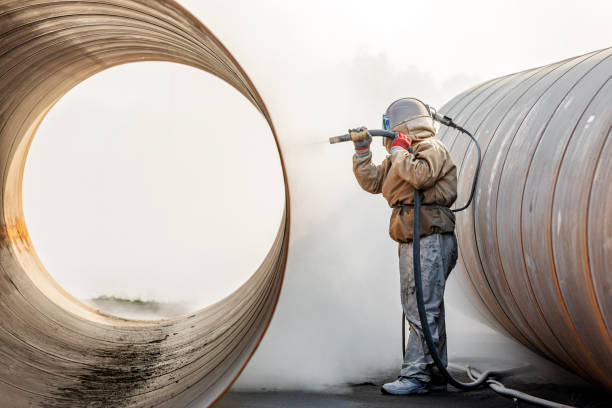
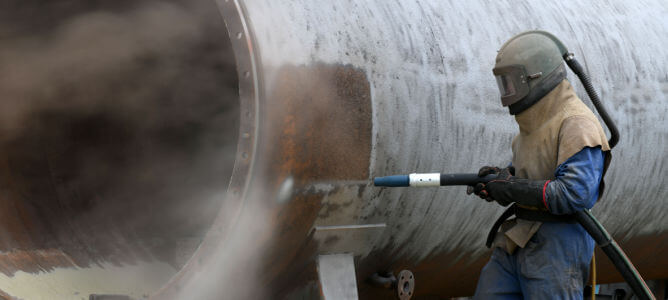
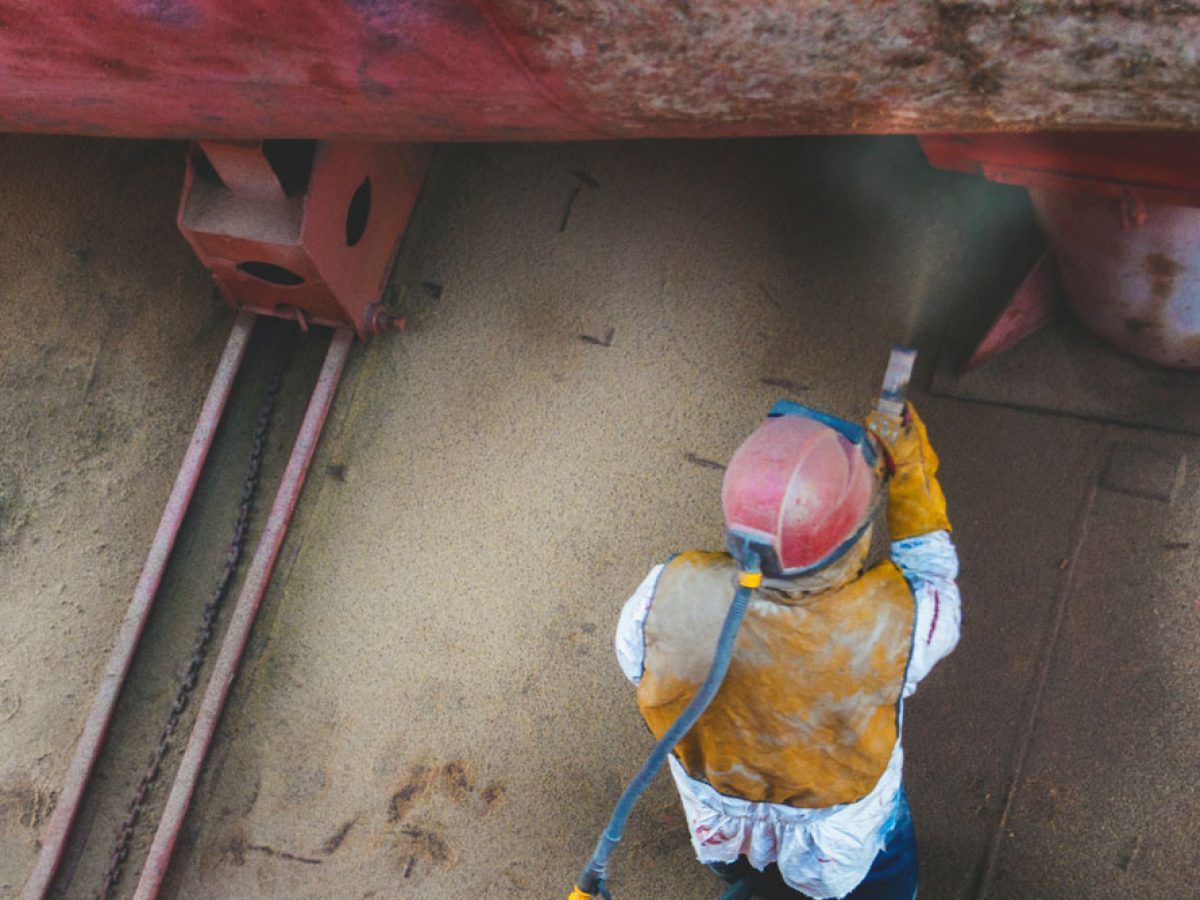
Sand blasting is a surface preparation process where compressed air propels abrasive particles at high velocity to clean steel or concrete surfaces.

  • Removes rust, old paint, scale, oil, and contaminants.
  • Produces a uniform roughness (anchor profile) that ensures better adhesion of protective coatings.
  • Achieves high-quality surface finish meeting international standards like SA 2.0 / SA 2.5 / SA 3.0.
  • Widely used in oil & gas, power plants, shipyards, refineries, and heavy industries.

  • Surface Standard: As per ISO 8501-1 / SSPC / NACE, generally SA 2.5 finish (Near White Metal).
  • Abrasive Material: Clean, dry silica sand / garnet / copper slag / aluminum oxide.
  • Air Pressure: 6 – 8 kg/cm² (for effective cleaning).
  • Surface Profile (Anchor Pattern): 40 – 75 microns (as per coating requirement).
  • Safety: Operator to wear helmet, gloves, respirator, and protective suit.

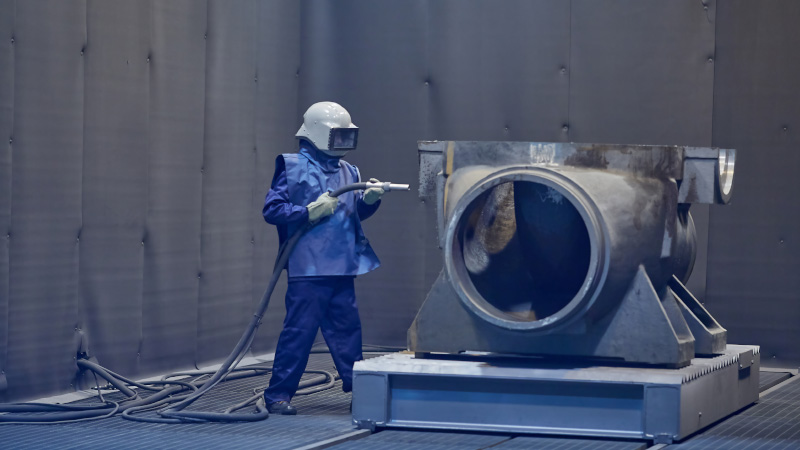
  • Blasting Equipment: Air compressor, blast pot, blasting hose, and nozzle (Venturi type).
  • Blasting Booth / Enclosure: Designed for dust control and abrasive recovery.
  • Dust Extraction System: To ensure environmental and worker safety.
  • Application Area: Pipelines, tanks, structural steel, bridges, ship hulls, refineries.
  • Abrasives: Silica sand, garnet, steel grit, or copper slag – as per project spec.
  • Consumables: Blast nozzles, hoses, couplings, PPE kits, respirators.
  • Equipment: Air compressors, blast pots, vacuum recovery systems.
  • Testing Tools: Surface profile gauge, dust tape test kit, visual comparators.